
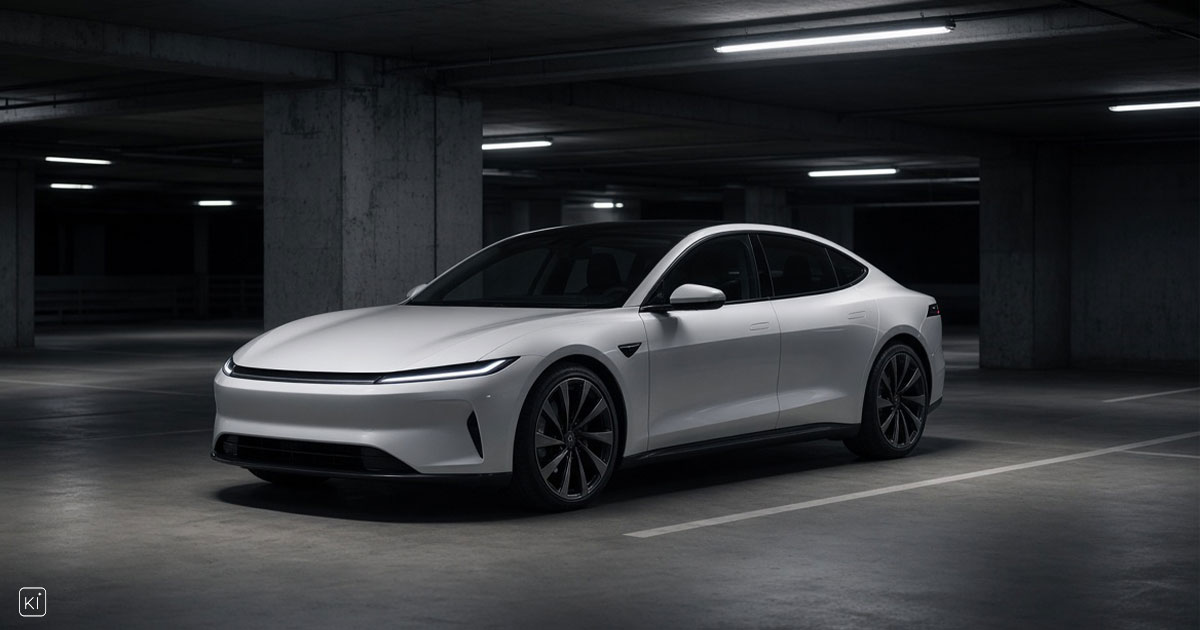
Lithium-ion batteries sit in electric cars, e-bikes, forklifts, power stations and stationary storage. The technology is everyday kit. A fire from these cells still does not behave like a classic vehicle or warehouse fire: it can spread from cell to cell, release toxic gases and flare up again after it looks extinguished.
Anyone responsible for a fleet, logistics or a workshop does not need a marketing promise. They need a clear picture: what happens inside the battery? What can staff do — and what should they not do? And what role does a fire blanket play until the fire service takes over?
What happens in the cell: thermal runaway
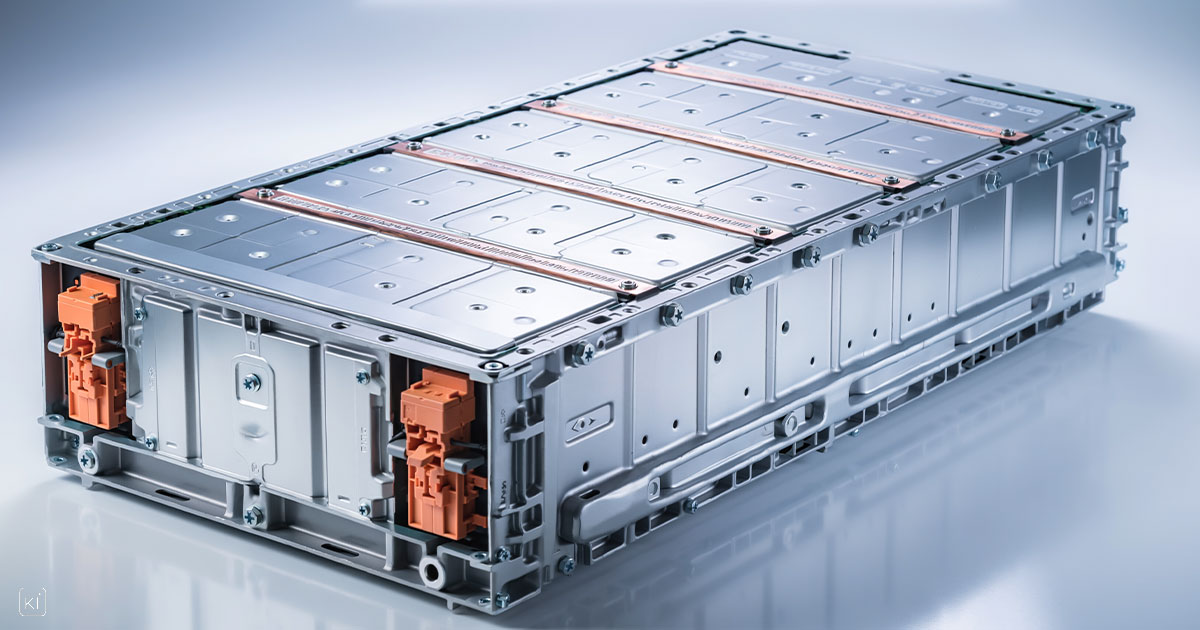
Specialist bodies use thermal runaway for a self-reinforcing, heat-generating reaction inside the cell. Typical triggers are mechanical damage, overcharging, an internal short circuit or heat from outside.
Two points set the course apart from a wood or fuel fire:
First, the reaction can continue from cell to cell (propagation). A local defect becomes a surface event across the pack.
Second, some cathode materials break down at high temperature and release heat and oxygen. The reaction therefore carries part of its own oxidiser. That is what people mean when they say the fire cannot simply be smothered.
Temperatures inside the cell can rise well above 1,000 °C. Outside you often see alternating light-grey and deep-black smoke, hissing venting and sometimes jet flames. In enclosed rooms the escaping electrolyte vapours can also form an explosive atmosphere.
Why the works extinguisher often is not enough
The misunderstanding usually starts with the word “extinguish”. For the fire service, water is the agent of choice: it cools and, if enough of it reaches the inside of the pack, can break the chain reaction. Fire-service guidance and DGUV say so explicitly. Foam on stored goods is viewed more critically: the reaction continues under the foam blanket and you lose sight of the load.
On site you lack exactly what the fire service brings: large volumes of water, branch pipes, a thermal camera, respiratory protection. A handheld extinguisher cools the casing at best for a moment. Powder and CO₂ suppress external flames but do not reliably stop the process in the cell. That is why the German Social Accident Insurance treats staff attempts to fight lithium-ion battery fires as critical: priority is evacuate, warn, call the fire service — not a heroic attack with the 6 kg unit.
Add the reignition risk. Damaged packs can run away again hours or days later. After the event the vehicle or device remains a job for specialists, not “blanket off, back to work”.
What a fire blanket can do — and what it cannot
This is where the blanket comes in, and honesty matters. A fire-containment blanket does not extinguish the chemical process in the cell. It isolates flames and some of the smoke, slows spread to neighbouring vehicles, pallets or equipment and buys the minutes that the emergency call and the journey take.
Intervention guides for industrial trucks describe it the same way: the blanket goes over the battery or the vehicle, limits spread and protects the surroundings. After it is removed the fire can flare again. Water from the fire service is still required.
Flame Cover fire blankets are manufactured in Belgium by CARPRO. AP City Design distributes them in Germany and into Spain, in sizes for electric cars, e-bikes, lithium devices and machinery or forklift fires. The right size depends on the object, not on catalogue taste: a passenger car needs a different area than a reach truck in a narrow aisle.
Flame Cover fire blankets are manufactured in Belgium by CARPRO. AP City Design distributes them in Germany and into Spain, in sizes for electric cars, e-bikes, lithium devices and machinery or forklift fires. The right size depends on the object, not on catalogue taste: a passenger car needs a different area than a reach truck in a narrow aisle.
What companies can prepare in practice
Good preparation is unspectacular and outweighs any blog line:
Fix the alarm procedure. Everyone knows who calls the fire service and which details to pass on (“lithium-ion, electric forklift / EV, hall X”).
Distance and fire load. Charging zones not between cardboard and solvents. Damaged traction batteries not “against the wall overnight for now”.
Personal limit. Nobody walks into dense smoke. Nobody opens a pack that is venting.
A fire blanket to hand in the right place — charging bay, yard, workshop — and one drill on how it goes over the object.
Handover to the fire service. Where is the vehicle? Where is the blanket? Was there venting, a bang, a jet flame?
Who this matters for most
A lithium fire is not a classic extinguishing drill. Anyone who knows why water and foam often fall short in the first moment acts more calmly: people out, fire service in, limit the spread. The right fire blanket is there for that — not as a substitute for the crew, but as the time they need.
Sources and further reading
vfdb-Merkblatt 10-17 – recommendation for fire-service operations involving lithium cells, batteries and accumulators (Vereinigung zur Förderung des Deutschen Brandschutzes). (Vereinigung zur Förderung des Deutschen Brandschutzes).
DGUV FBFHB-024 – guidance on fighting lithium-ion battery fires in vehicle fires; staff extinguishing attempts are treated as critical there.
AGBF-Fachempfehlungen – fire protection for lithium-ion batteries as stored goods (water as the preferred agent; foam viewed critically).
Linde Material Handling, Rettungsleitfaden Lithium-Ionen-Batterie – role of the containment blanket: slow the spread, do not extinguish the cell process; extinguishing water is still required afterwards.
DIN SPEC 91489 sets requirements for fire-containment blankets for vehicles and batteries. Whether a given blanket is tested to that spec is in the product data sheet — not in this article.
This text does not replace an operational procedure or a risk assessment. In a fire: keep your distance, call the fire service.


